The Complete Guide to Dairy-Free Substitutes for Baking
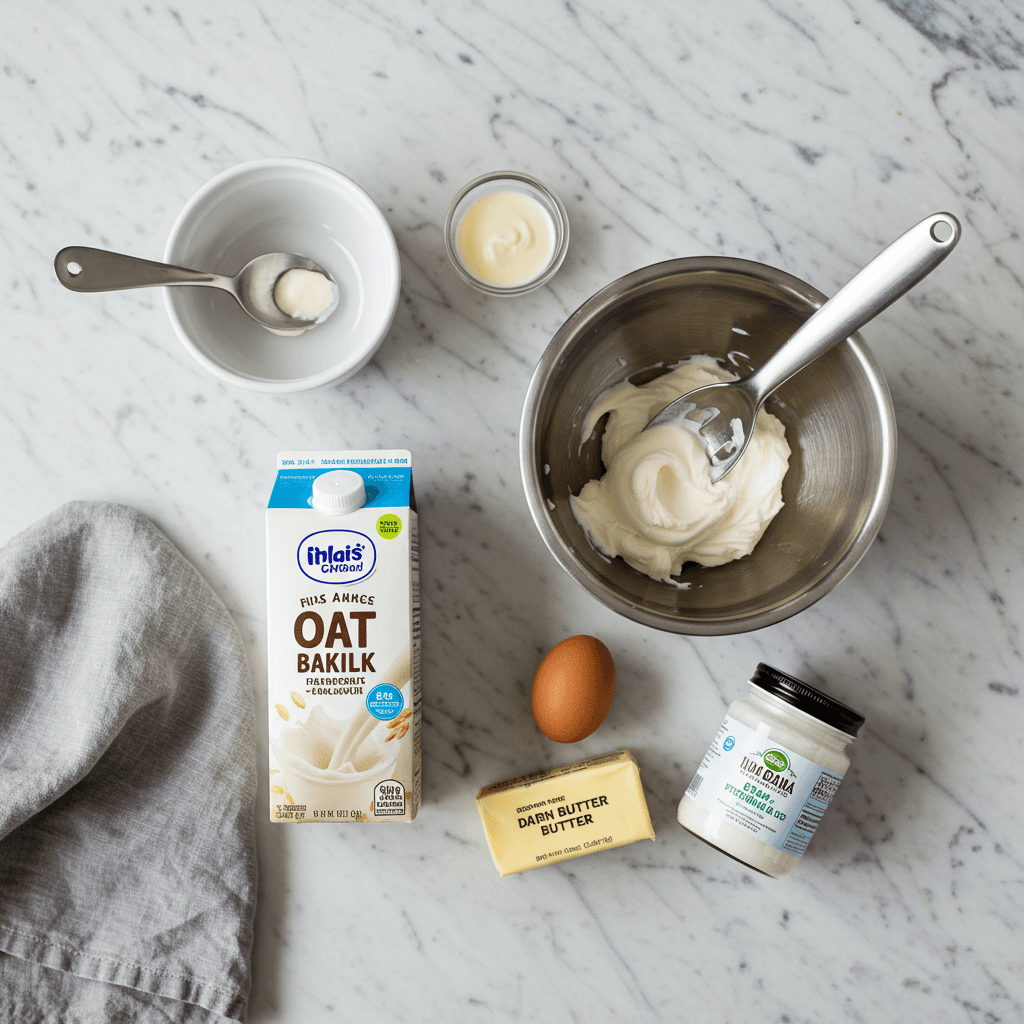
The Complete Guide to Dairy-Free Substitutes for Baking (That Actually Work)
Whether you avoid dairy by choice, because of an intolerance, or for someone you cook for, baking without butter, milk, and cream is entirely doable once you understand what each ingredient is actually doing in the recipe. This guide gives you every substitution you need, tested and explained, so you can bake with confidence.
These swaps are: Dairy-Free Some alternatives listed below also happen to be vegan, nut-free, or soy-free. Each row in the tables notes what else it avoids, so you can pick the right option for your needs.
Why Dairy-Free Baking Substitutes Work Differently Than You Think
Dairy does three jobs in baking: it provides fat (for tenderness and flavor), liquid (for moisture and structure), and protein (for binding and browning). A successful dairy-free swap accounts for the function, not just the ingredient.
A cup of oat milk replaces a cup of whole milk by volume, but oat milk has less protein and fat than dairy milk. In a simple pancake batter, that difference is barely noticeable. In a custard, it matters. Once you understand what dairy is doing in a recipe, the substitutions become obvious.
The tables below break it down by ingredient category. Bookmark the one you need and come back whenever you are mid-recipe and reaching for something dairy-free.
Dairy-Free Milk Alternatives for Baking
The best dairy-free milk substitutes for baking:
Oat milk — best all-rounder; neutral flavour, moderate fat; 1:1 swap
Soy milk — highest protein; closest to dairy in custards and breads; 1:1 swap
Full-fat coconut milk — rich and creamy; adds coconut flavour; 1:1 swap
Unsweetened almond milk — light; works in thin batters; 1:1 swap
Rice milk — thinnest consistency; pancakes only; 1:1 swap
Which Plant Milk Works Best as a Dairy-Free Milk Alternative?
Most plant milks replace dairy milk at a straight 1:1 ratio by volume. The differences are in fat content, protein, and flavor:
Oat milk — The best all-rounder for baked goods. Neutral flavor, moderate creaminess, widely available. Check the label if you avoid gluten; some oat milks are produced in shared facilities.
Unsweetened almond milk — Light, slightly nutty, works well in thin batters and crepes. Contains tree nuts.
Soy milk — The highest-protein plant milk, closest to dairy milk in baking behavior. Works especially well in custards and breads. Contains soy.
Full-fat coconut milk — Rich and creamy with a noticeable coconut flavor. Best for tropical recipes, chocolate cake, and banana bread.
Rice milk — The thinnest consistency of the group. Works for pancakes and thin batters but lacks the body needed for custards or puddings.
Milk Substitution Table
Dairy Milk Amount | Substitute | Ratio | Best For | Also Avoids | Watch Out For
1 cup | Oat milk | 1:1 | Cakes, muffins, pancakes | Soy, nuts (check label for gluten cross-contamination) | Some brands processed in facilities with wheat
1 cup | Unsweetened almond milk | 1:1 | Light batters, crepes | Soy, dairy | Not suitable for nut allergy
1 cup | Soy milk | 1:1 | Custards, puddings, bread | Nuts, dairy | Not suitable for soy allergy
1 cup | Full-fat coconut milk | 1:1 | Chocolate cake, banana bread | Soy, nuts, gluten | Adds coconut flavor; not ideal when neutral taste is needed
1 cup | Rice milk | 1:1 | Thin batters, pancakes | Soy, nuts, gluten | Too thin for custards or anything that needs body
SafeBites Tip: If you have switched from dairy to oat milk and still notice discomfort after eating baked goods, it is worth logging what you ate. Some oat milks contain trace gluten from shared processing facilities, and that detail is easy to miss on the label. Logging the specific brand helps you spot whether the issue is the oat milk itself or something else in the recipe.
Dairy-Free Butter Substitutes for Baking
The best dairy-free butter substitute for baking is vegan butter (such as Miyoko's or Earth Balance) at a 1:1 ratio — it matches butter's fat content and behaviour most closely. Refined coconut oil is the best neutral-flavour alternative. Lower-fat substitutes like applesauce change the texture and should only be used in dense muffins or loaf cakes.
Choosing the right dairy-free butter substitute for baking depends on what butter is actually doing in your recipe.
What Does Butter Do in Baking? (Why the Substitute Has to Match)
Butter is doing three things at once in most baking recipes:
Fat — creates tenderness, richness, and flavor
Moisture — prevents dryness in the finished product
Structure — when creamed with sugar, butter traps air and gives cakes their rise
The best dairy-free butter substitutes match butter's fat content as closely as possible. Lower-fat alternatives (like applesauce) change the texture significantly and should only be used where noted.
Butter Substitution Table
Butter Amount | Substitute | Ratio | Fat Content Match | Flavor Notes | Also Avoids
1 cup (2 sticks) | Vegan butter (Earth Balance, Miyoko's) | 1:1 | High | Closest to butter behavior in every application | Dairy (check label for soy or coconut)
1 cup | Refined coconut oil (not virgin) | 1:1 | High | Neutral flavor when refined; virgin adds coconut taste | Dairy, soy, nuts, gluten
1 cup | Avocado oil | 3/4 cup | Medium | Works in moist quick breads; not ideal for creaming | Dairy, soy, nuts, gluten
1 cup | Applesauce | 1/2 cup | Low | Adds moisture and sweetness; denser crumb; reduces overall fat | Dairy, soy, nuts, gluten
1 cup | Mashed banana | 1/2 cup | Low | Adds banana flavor; best for loaf cakes and muffins | Dairy, soy, nuts, gluten
SafeBites Tip: Vegan butters vary significantly in their ingredient lists. Some contain soy, some contain coconut, and some contain sunflower oil. If you are tracking multiple intolerances, check the label carefully and log the specific brand you used. What works from one brand may not work from another. Tracking which dairy-free substitutes work for your body is exactly what [keeping a food diary for allergies](/blog/how-to-keep-a-food-diary-food-intolerances) is designed to help with.
Dairy-Free Heavy Cream Substitutes
Substitution Table
Heavy Cream Use | Substitute | Ratio | Notes | Also Avoids
Whipped cream | Chilled full-fat coconut cream | 1:1 | Must be refrigerated overnight; whips well when cold | Dairy, soy, gluten
Ganache or frosting | Coconut cream + vegan butter | 1:1 | Rich and glossy; works with dark chocolate | Dairy (check vegan butter label)
Cream in sauces | Cashew cream (soaked and blended) | 1:1 | Smooth and neutral; not suitable for nut allergy | Dairy, soy, gluten
Pour-over cream | Oat cream or oat creamer | 1:1 | Widely available in most supermarkets | Dairy, soy, nuts (check label for gluten)
Cream Cheese and Sour Cream Substitutes
Substitution Table
Dairy Ingredient | Substitute | Ratio | Best For | Also Avoids
Cream cheese | Vegan cream cheese (Violife, Kite Hill) | 1:1 | Frostings, cheesecakes, dips | Dairy (check label for soy or nuts)
Sour cream | Unsweetened coconut yogurt | 1:1 | Muffins, quick breads, coffee cake | Dairy, soy, gluten
Sour cream | Cashew sour cream | 1:1 | Frostings, dips | Dairy, soy, gluten — but contains tree nuts
Buttermilk | Plant milk + 1 tbsp apple cider vinegar | 1:1 | Let stand 5 minutes before using; works in any buttermilk recipe | Depends on the plant milk used
Tips for Dairy-Free Baking Success
Fat content matters most
When choosing a substitute, match the fat content of the original ingredient first. Low-fat alternatives like applesauce or rice milk change the texture significantly. They work well in specific recipes (dense muffins, pancakes), but they are not universal replacements.
When in doubt, choose the higher-fat substitute. A vegan butter or refined coconut oil will behave more like dairy butter than applesauce will.
Temperature and consistency
Coconut oil solidifies at room temperature. Melt it before adding to a batter unless the recipe specifically calls for solid fat (as in pie crusts or scones where you want flaky layers).
Coconut cream whips only when it is cold. Refrigerate the can overnight, scoop out the thick cream from the top, and discard the water. Room-temperature coconut cream will not whip.
Read every label
"Dairy-free" does not always mean "free from all allergens." Many plant milks and vegan butters are processed in facilities that also handle tree nuts, wheat, or soy. If you are managing multiple food sensitivities, the ingredient list and allergen statement on the packaging are worth reading every time — even for brands you have bought before, since formulations can change.
For cross-contamination concerns, check with your healthcare provider for guidance specific to your situation.
If you want to understand the difference between a dairy intolerance and a dairy allergy before you start swapping ingredients, see our guide: food sensitivity vs food allergy explained.
SafeBites Tip: When you bake with a new dairy-free substitute, log the finished dish with the brand of each ingredient you used. If you notice any discomfort afterward, you will have a detailed record to look back on — including exactly which oat milk or vegan butter brand you tried that day. Over time, these details help you figure out which products work for you and which ones do not.
Tried a dairy-free bake? Log it in SafeBites and note how you felt afterward. Whether it is a new oat milk brand or a vegan butter you have never tried, tracking the details helps you figure out what your body likes — and what it does not. [Download SafeBites — Free](https://safebites.io/download)
Frequently Asked Questions
Can I use any plant milk for baking?
Most plant milks work at a 1:1 ratio by volume, but fat content and protein levels affect the finished texture. Oat milk and soy milk perform closest to dairy milk in most recipes. Rice milk is too thin for custards, and coconut milk adds a noticeable flavor. The substitution table above covers when to use each one.
Does dairy-free mean vegan?
All dairy-free ingredients are vegan in the sense that they do not contain animal milk. However, "vegan baking" often also means egg-free, which is a separate challenge with its own set of substitutions. This guide focuses specifically on dairy replacements.
What is the best dairy-free butter for baking?
Miyoko's European Style Cultured Vegan Butter and Earth Balance Buttery Sticks are the top choices for most baking. Both cream well with sugar, melt evenly, and produce a similar crumb to conventional butter. Check the label: some vegan butters contain soy or coconut, so confirm the specific product works with any other foods you avoid.
Related reading:
Food Sensitivity vs Food Allergy: What's the Difference?
How to Keep a Food Diary for Allergies and Food Sensitivities
Tags
Track your meals and symptoms with SafeBites
Log what you eat, scan product barcodes, and discover patterns in your food sensitivities.
Download SafeBites